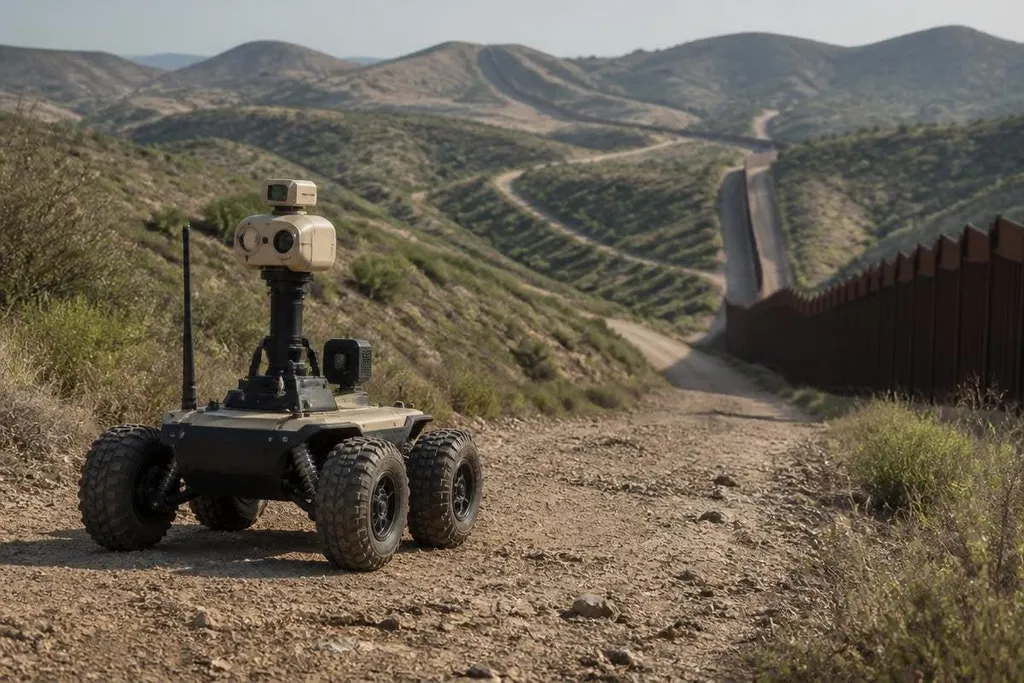
Border security robots are gaining attention because they can watch difficult ground without putting a person there first. The useful question is not whether a robot looks advanced, but which task it can handle, for how long, and what happens when its sensors miss something.
Quick read
- Robots can carry cameras, thermal sensors, radios, and location tools.
- Remote control remains important when terrain, weather, or people create uncertainty.
- A robot needs a clear response plan, not only a long battery run time.
Why interest is growing
Border areas can cover large distances and include steep ground, loose soil, water, vegetation, or poor roads. A wheeled or tracked robot can check a route before a person enters it, while a remote operator watches video and decides what to do next.
That changes the task from constant foot patrols to a mix of machine checks and human decisions. The robot can spend time in a fixed area, return to a charging point, or move between known routes while people handle events that need judgment.
The cost case depends on the job. A robot that watches a quiet access road may reduce routine trips. A machine sent into rough ground may save time during a search.
Neither claim works without records showing how often the machine runs, how many false alerts it creates, and how much staff time it still needs.
What the robots actually do
Most border security robots are sensor carriers. A visible-light camera shows ordinary scenes, while a thermal camera can show heat differences at night or in low light. LiDAR measures distance with laser pulses, helping the robot build a map of nearby ground and objects.
The platform may also carry a radio, loudspeaker, spotlight, or system for sending live video. These parts matter because a sensor result has little value if the operator cannot see it, reach the robot, or speak to someone near it.
Some robots move by remote control. Others can follow a planned route and stop when their cameras or obstacle sensors detect a change. That form of autonomy can handle repeatable movement, but a person still needs to review alerts and take over when the scene falls outside the robot's training.
Border patrol trials need a dated record of the robot, route, sensor view, operator, and alert response. Border robotics reports from Robot24.com can show those details beside claims about remote patrols, leading into the limits that appear when terrain, weather, or people change the scene.
Where the limits appear
People remain necessary. The machine collects data, a network sends it, software marks a possible event, and an operator decides whether action is needed.
Each link can fail. A camera may lose detail in rain or dust. A radio link may weaken behind hills or buildings. A tracked platform may cross loose ground but still become stuck in mud, snow, or shallow water. A long battery run time also has a limit if the robot must carry heavy sensors or climb slopes.
False alerts create their own cost. If software marks animals, branches, or moving shadows as people, staff must spend time checking those alerts. Too many alarms can make a system slower to use, even when the robot itself keeps moving.
Privacy and safety also need written rules. Operators need to know what the cameras record, how long data stays stored, who can view it, and when a robot may use a light, speaker, or other device near people.
A practical buying checklist
Before a border agency tests a robot, it should record:
- The route: ground type, slopes, crossings, weather, and radio dead zones.
- The task: patrol, search, observation, communication, or a mix of these jobs.
- The handoff: who receives an alert and how fast they can reach the site.
- The failure plan: recovery gear, spare batteries, lost-link behavior, and manual control.
- The evidence: false alerts, missed events, run time under real loads, and repair hours.
This list keeps the trial tied to work that staff already do. A short demonstration on a clean path says little about a machine's value on wet ground at night.
The expansion of border security robots will depend on those field records. Until agencies publish clear figures for missed events, false alerts, repairs, and staff time, I'd treat most claims as a trial proposal rather than a finished security system. The next useful number is the robot's error rate after a full season outdoors.